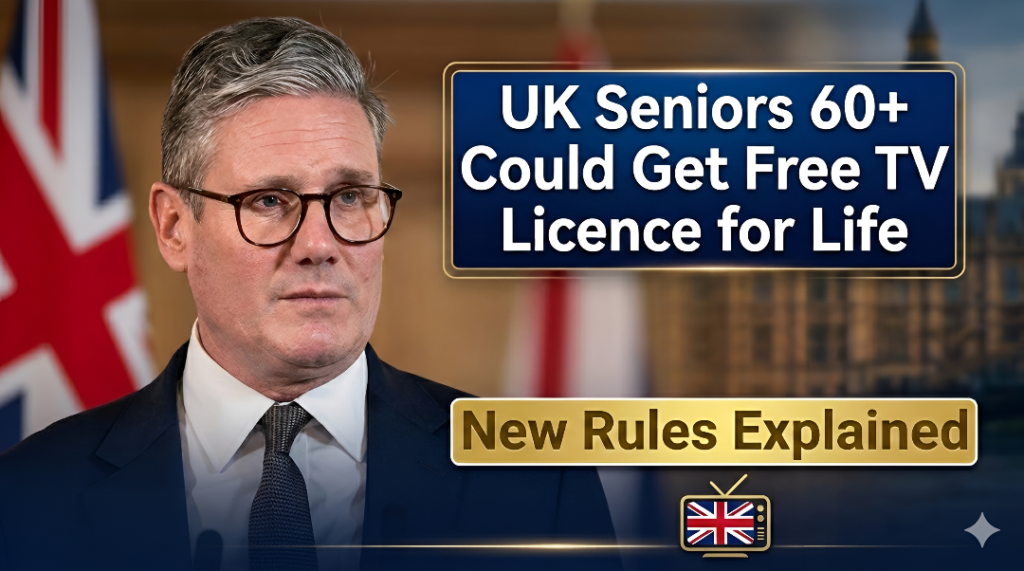
The possibility that UK seniors aged 60+ could get a free TV licence for life has become one of the most talked-about topics among pensioners in 2026. With household expenses rising steadily, including food prices, electricity bills, council tax, and healthcare costs, many older citizens are feeling financial pressure more than ever before. Television remains an important source of daily news, entertainment, and companionship for seniors, especially for those living alone. Because of this, any proposal to remove the £169.50 annual TV licence fee is seen as a meaningful form of support. Although the policy has not yet been officially confirmed, discussions and public campaigns have made it a national issue that continues to gain attention.
What Is the Current UK TV Licence Rule for Pensioners?
Under the existing system in 2026, a standard UK TV licence costs £169.50 per year for households watching live television or BBC iPlayer. Free TV licences are currently available only to households where at least one person is aged 75 or over and receives Pension Credit. This rule came into effect after changes were made in 2020, shifting responsibility from the government to the BBC. As a result, not all pensioners automatically qualify anymore. Those aged between 60 and 74 must still pay the full amount unless they meet other specific criteria. This limitation is one of the main reasons why campaigners are demanding a broader age-based free licence scheme.
Why Is There Talk of Free TV Licence for 60+ Seniors?
The growing conversation around a free TV licence for seniors aged 60+ is largely driven by economic concerns and social wellbeing arguments. Advocacy groups highlight that many individuals in their early 60s are either retired or working part-time with limited income. Unlike younger households, seniors may not have opportunities to increase their earnings. Campaigners argue that television is not a luxury but an essential service for older citizens who depend on it for staying informed and socially connected. In Parliament, several MPs have raised concerns about the fairness of the current system, suggesting that lowering the age threshold could provide better protection to vulnerable groups.
Has the UK Government Officially Approved Free TV Licence for 60+?
As of now, there is no official confirmation that all seniors aged 60 and above will receive a lifetime free TV licence. Government sources indicate that while discussions have taken place, no final budget allocation or legislative change has been announced. Any major reform would require coordination between the UK Government and the BBC, as the licence fee contributes significantly to BBC funding. Some reports suggest policymakers are evaluating different options, including partial subsidies or age adjustments. However, until a formal statement is released through GOV.UK or Parliament, seniors should treat such reports as proposals rather than confirmed policy.
How the Free TV Licence Scheme Worked in the Past
Before 2020, every UK resident aged 75 or older was entitled to a free TV licence funded directly by the government. This universal system was simple and did not require income-based verification. However, when financial responsibility shifted to the BBC, new eligibility conditions were introduced. The addition of the Pension Credit requirement reduced the number of beneficiaries significantly. Critics argue that thousands of eligible pensioners missed out simply because they were not claiming Pension Credit. This past experience is often cited as evidence that a clear age-based rule, possibly starting at 60 or 65, would be more transparent and easier to administer.
Who Currently Qualifies for a Free TV Licence in 2026?
In 2026, eligibility remains limited. A household can receive a free TV licence only if someone living there is aged 75 or older and receives Pension Credit. The application process requires proof of age and benefit status. If Pension Credit stops, the free licence may also be withdrawn. Seniors aged 60 to 74 do not currently qualify unless future reforms are introduced. Therefore, it is important for pensioners to verify their benefit status and ensure they are not missing out on Pension Credit, which could unlock this and other forms of financial support.
Why Pension Credit Is Important for Elderly Benefits
Pension Credit plays a crucial role in supporting low-income pensioners across the UK. It guarantees a minimum weekly income and may provide additional payments for housing costs, disabilities, or caring responsibilities. Beyond income support, Pension Credit acts as a gateway to several extra benefits, including free NHS dental care, Cold Weather Payments, and the current free TV licence for eligible over-75 households. Government data suggests that many pensioners who qualify still do not apply, potentially missing out on thousands of pounds annually. Checking eligibility could make a significant financial difference.
Financial Pressure on UK Seniors in 2026
Despite the State Pension increasing under the triple lock system, many seniors continue to struggle with rising living costs. Energy bills during winter months can be particularly challenging, and healthcare-related expenses often increase with age. For pensioners living alone, the financial burden is even heavier because there is no shared income. Supporters of the free TV licence for UK seniors 60+ argue that removing this yearly expense would provide direct and practical relief. Even though £169.50 may seem modest to some, for low-income retirees it can represent a meaningful portion of their monthly budget.
Could There Be a Discount Instead of Full Free Licence?
Another proposal being discussed involves introducing a discounted TV licence rather than a fully free one. For instance, seniors aged 60–74 might receive a reduced rate, such as 50% off the standard fee. This compromise could ease financial pressure while maintaining BBC funding stability. Some experts believe a tiered system based on both age and income could be more sustainable in the long term. However, like the full free licence proposal, this idea has not yet been officially approved. It remains part of ongoing discussions about how best to balance public support and public broadcasting costs.
What Seniors Should Do Right Now
Until new rules are formally introduced, seniors aged 60 and above should continue following current TV licensing regulations. It is important to check official announcements from GOV.UK or TV Licensing rather than relying on social media rumours. Those aged 75+ should confirm whether they qualify for Pension Credit and apply promptly if eligible. Seniors between 60 and 74 should stay informed about policy updates, especially as future government budgets or election campaigns may include changes to elderly benefits.
Public Reaction to the Proposed 60+ Free TV Licence
Public response to the proposal has been mixed but largely supportive among older citizens. Many pensioners argue that television plays a vital role in reducing loneliness and keeping them connected to society. Advocacy organisations representing the elderly have welcomed discussions about lowering the age threshold. On the other hand, critics question how the scheme would be funded and whether it could impact other public services. The debate reflects a broader national conversation about how to support an ageing population while managing public finances responsibly.
Conclusion
The idea that UK seniors aged 60+ could get a free TV licence for life continues to generate hope and debate across the country. At present, the official rule remains limited to households with someone aged 75 or over who receives Pension Credit. While proposals to expand eligibility are being discussed, no confirmed policy change has been implemented. Seniors are advised to stay informed through reliable government sources and ensure they are claiming all benefits available to them. If future reforms are introduced, they could provide meaningful financial relief to millions of older citizens in the UK.